
The total dollar amounts of two sides of accounting equation are always equal because they represent two different views of the same thing. The accounting equation states that a company’s assets must be equal to the sum of its liabilities and equity on the balance sheet, at all times. The accounting equation is based on the premise that the sum of a company’s assets is equal to its total liabilities and shareholders’ accounting formula equity. As a core concept in modern accounting, this provides the basis for keeping a company’s books balanced across a given accounting cycle. The accounting equation is often expressed as an accounting formula and states that the sum of liabilities and equity is always equivalent to the total assets of the organization. It is the fundamental foundation of accounting that ensures financial statement accuracy.
Example Transaction #2: Purchase of Equipment for Cash

The remainder is the shareholders’ equity, which would be returned to them. In other words, the total amount of all assets will always equal the sum of liabilities and shareholders’ equity. Assets represent the valuable resources controlled by a company, while liabilities represent its obligations. Both liabilities and shareholders’ equity represent how the assets of a company are financed. If it’s financed through debt, it’ll show as a liability, but if it’s financed through issuing equity shares to investors, it’ll show in shareholders’ equity.
- Drawings are amounts taken out of the business by the business owner.
- Shaun Conrad is a Certified Public Accountant and CPA exam expert with a passion for teaching.
- To prepare the balance sheet and other financial statements, you have to first choose an accounting system.
- For all recorded transactions, if the total debits and credits for a transaction are equal, then the result is that the company’s assets are equal to the sum of its liabilities and equity.
- In this article, we take a deep dive to understand the core attributes of the accounting equation, its role in day to day transactions and how it plays a crucial role in accurate financial reporting.
D. Double Entry Accounting System
- A liability, in its simplest terms, is an amount of money owed to another person or organization.
- Debt is a liability, whether it is a long-term loan or a bill that is due to be paid.
- Corporate shares are easily transferable, with the current holder(s) of the stock being the owners.
- Parts 2 – 6 illustrate transactions involving a sole proprietorship.Parts 7 – 10 illustrate almost identical transactions as they would take place in a corporation.Click here to skip to Part 7.
- A liability is considered current of they are payable within 12 months from the end of the accounting period, or within the company’s normal operating cycle if the cycle exceeds 12 months.
The company’s assets are equal to the sum of its liabilities and equity. The balance sheet is also known as the statement of financial position and it reflects https://www.bookstime.com/articles/absorption-costing the accounting equation. The balance sheet reports a company’s assets, liabilities, and owner’s (or stockholders’) equity at a specific point in time.
Order To Cash
This observation tells us that accounting statements are important in investment and credit decisions, but they are not the sole source of information for making investment and credit decisions. As you can see, no matter what the transaction is, the accounting equation will always balance because each transaction has a dual aspect. Often, more than one element of the accounting equation is impacted but sometimes, like with transaction 3, the same part of the equation (in this case assets) goes up and down, making it look like nothing has happened. The income statement is the financial statement that reports a company’s revenues and expenses and the resulting net income.

Example Transaction #9: Receipt of Cash on Account
One of the main financial statements (along with the balance sheet, the statement of cash flows, and the statement of stockholders’ equity). The income statement is also referred to as the profit and loss statement, P&L, statement of income, and the statement of operations. The income statement reports the revenues, gains, expenses, losses, net income and other totals for the period of time shown in the heading of the statement. If a company’s stock is publicly traded, earnings per share must appear on the face of the income statement. The purpose of this article is to consider the fundamentals of the accounting equation and to demonstrate how it works when applied to various transactions. Does the stockholders’ equity total mean the business is worth $720,000?
- For example, although the land cost $125,000, Edelweiss Corporation’s balance sheet does not report its current worth.
- An asset is a resource that is owned or controlled by the company to be used for future benefits.
- Assets represent the ability your business has to provide goods and services.
- From the Statement of Stockholders’ Equity, Alphabet’s share repurchases can be seen.
- This shows all company assets are acquired by either debt or equity financing.
- The global adherence to the double-entry accounting system makes the account-keeping and -tallying processes more standardized and foolproof.
- Balance Sheets shown above and the Income Statement and detailed Statement of Stockholder’s Equity in this section.
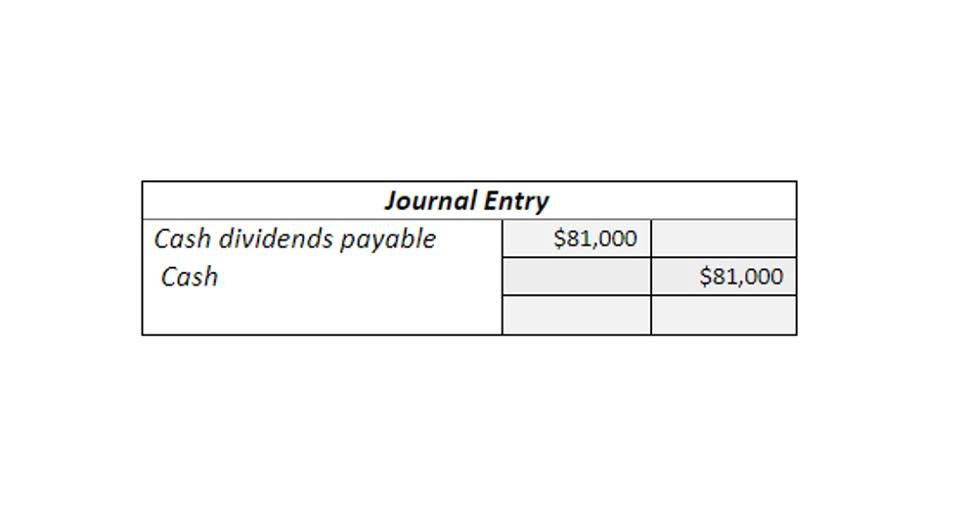
Accounting software is a double-entry accounting system automatically generating the trial balance. The trial balance includes columns with total debit and total credit transactions at the bottom of the report. Ted is an entrepreneur who wants to start a company selling speakers for car stereo systems. After saving up money for a year, Ted decides it is time to officially start his business. He forms Speakers, Inc. and contributes $100,000 to the company in exchange for all of its newly issued shares.
4: The Basic Accounting Equation
Debit: Definition and Relationship to Credit – Accounting – Investopedia
Debit: Definition and Relationship to Credit – Accounting.
Posted: Thu, 07 Sep 2017 20:31:08 GMT [source]